
In the wave of innovation sweeping through the global footwear manufacturing industry, a material that combines the resilience of rubber with the excellent processability of plastics is quietly leading a profound transformation—ethylene-vinyl acetate copolymer, known as EVA. As the cornerstone of modern footwear material technology, EVA, with its unique porous foam structure, exceptional lightweight cushioning properties, and strong design adaptability, is reshaping the performance boundaries and wearing experience of footwear—from professional athletic gear to everyday fashion shoes.
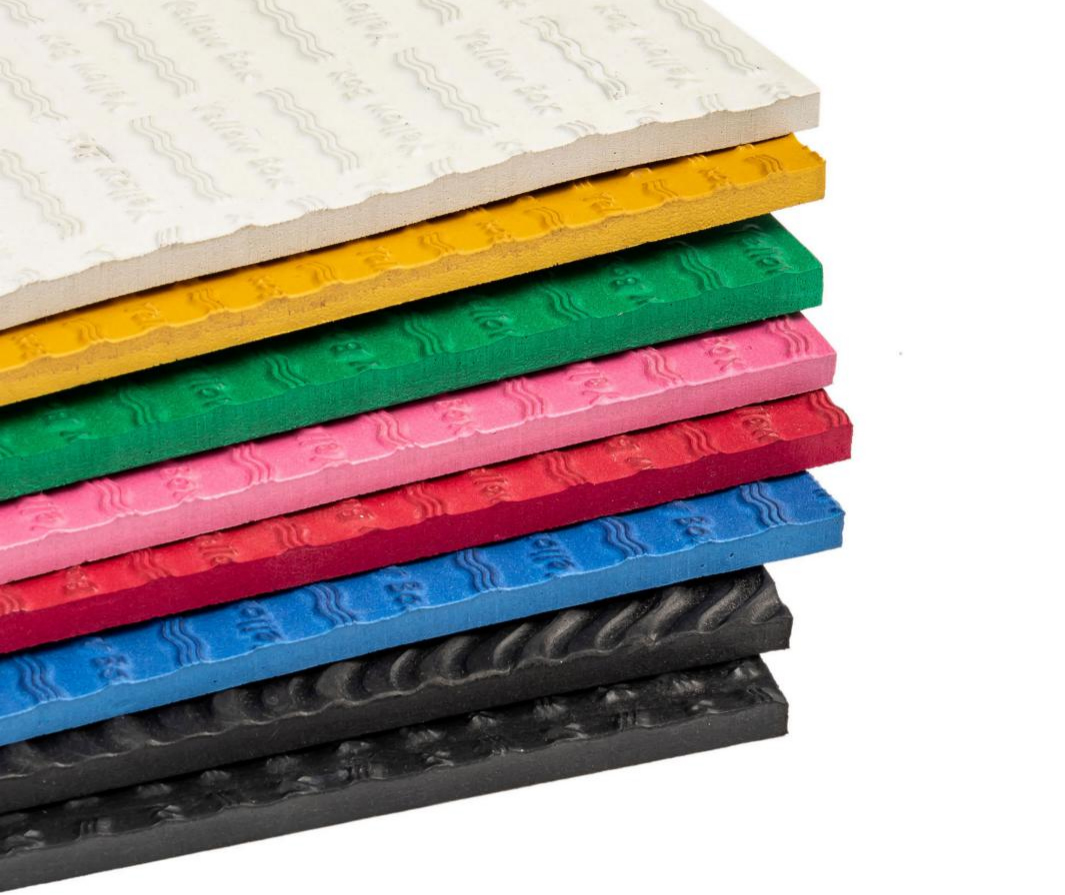
Core Characteristics: Engineering Breakthroughs in Footwear Design
The core advantages of EVA in the footwear industry stem from its precisely adjustable microstructure and physical properties. By controlling the foaming process, the material density can be flexibly adjusted within the range of 0.03–0.25g/cm³, providing targeted solutions for different shoe types:
1.Ultimate Cushioning: High-elasticity EVA midsoles can achieve an energy return rate of 55%–65%, effectively absorbing impact forces during movement and reducing joint load by approximately 30%.
2.Lightweight Experience: Up to 40%–50% lighter than traditional rubber soles, significantly enhancing comfort during prolonged wear and athletic agility.
3.Durability and Stability: The closed-cell structure provides excellent resistance to compression deformation (<10%), ensuring the sole retains its original shape even after long-term use.
4.Environmental Adaptability: Weather-resistant formulations maintain stable performance in extreme temperature ranges from –40°C to 70°C, adapting to diverse climates worldwide.
Technological Innovation: From Basic Foaming to Intelligent Responsiveness
Leading global material laboratories are driving EVA technology into its third generation:
1.Gradient Density Technology: Achieves multiple density zones in a single shoe sole (e.g., high rebound in the forefoot, ultra-cushioning in the heel) to dynamically match biomechanical needs.
2.Supercritical Fluid Foaming: Uses CO₂ or N₂ to replace chemical blowing agents, controlling pore diameters to 50–200 micrometers and improving uniformity by 40%.
3.Functional Composite Systems: Integrate antibacterial particles (silver ions/zinc oxides), phase-change microcapsules (temperature regulation range 18–28°C), and smart responsive dyes.
4.Sustainable Innovation: Bio-based EVA (derived from sugarcane ethanol) reduces carbon footprint by 45%, with closed-loop recycling systems achieving material reuse rates exceeding 70%.
Application Scenarios: A Performance Revolution Across All Footwear Categories
Professional Athletic Footwear:
Racing Shoes: Supercritical foamed EVA midsoles with densities of 0.12–0.15 g/cm³ achieve energy return rates >80%.
Basketball Shoes: Multi-layer composite midsole structures improve impact attenuation by 35%, with lateral support modulus reaching 25 MPa.
Trail Shoes: High VA content formulations (28%–33%) maintain flexibility at –20°C, enhancing grip on slippery surfaces.
Lifestyle and Fashion Footwear:
Casual Shoes: Micro-foaming technology delivers a “cloud-like” tactile experience, optimizing pressure distribution by 22% during 24-hour continuous wear.
Business Shoes: Invisible cushioning systems with ultra-thin 3mm EVA layers provide all-day arch support.
Children’s Shoes: Dynamic growth-oriented insoles with temperature-responsive smart structures adapt to the developing feet of children.

Manufacturing Upgrades: A New Paradigm for Digital Production
Smart factories are reshaping EVA footwear manufacturing:
4D Compression Molding: Customizes zonal density based on gait big data, reducing production cycles to 90 seconds per pair.
Laser Micro-Perforation Technology: Precisely controls the breathability of the foam structure, achieving micro-pore densities of 5,000–8,000 per cm².
Blockchain Traceability: Tracks the carbon footprint across the entire lifecycle, from bio-based raw materials to recyclable end products.
Sustainable Future: The Core Driver of Green Footwear
Leading industry brands have already established EVA circular economy models:
Adidas’s Futurecraft.Loop project achieves 100% recyclable EVA running shoes.
Nike’s Grind program transforms recycled EVA into sports surface materials, processing over 30 million pairs annually.
Innovative chemical depolymerization technology achieves an EVA monomer recovery rate of 85%, tripling the value compared to traditional physical recycling.
Post time: Jan-15-2026