
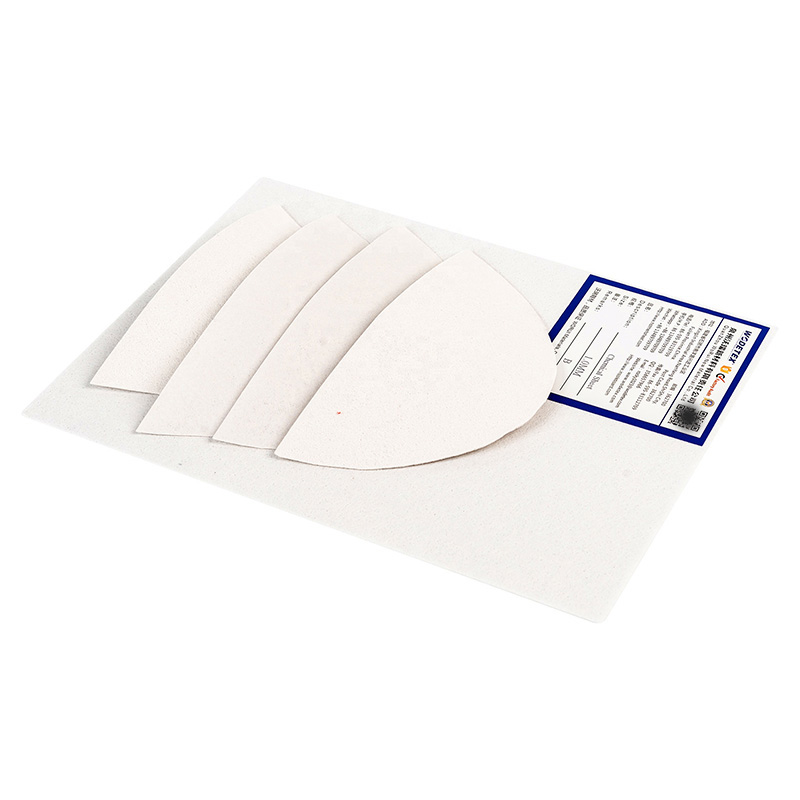
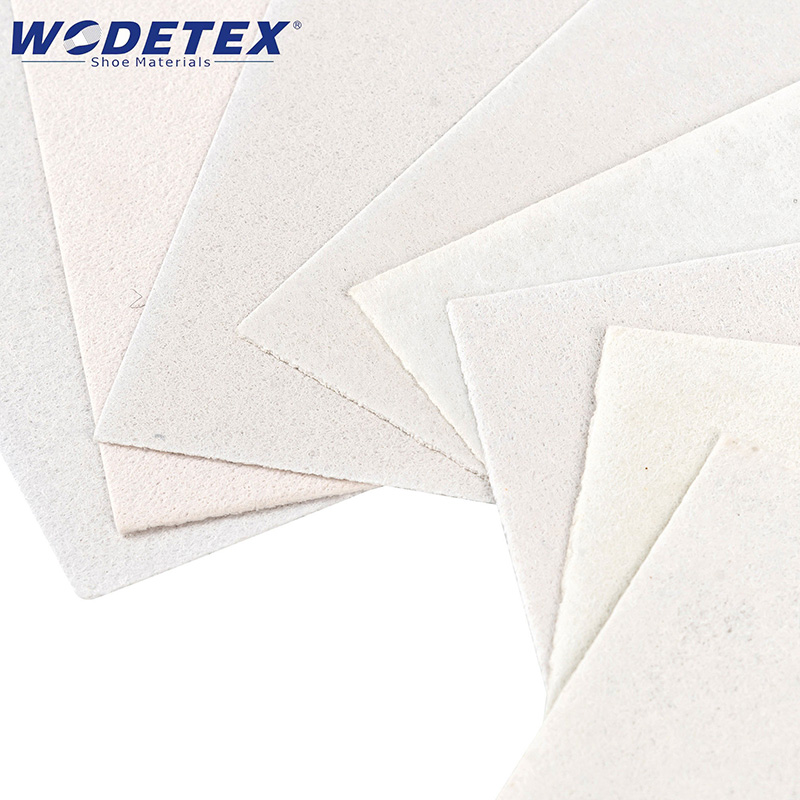
Chemical sheet toe puff, also known as chemical fiber resin interlining, is a core auxiliary material specially designed for shaping and reinforcing shoe toes and heels. Different from traditional leather pulp toe puff that requires soaking in water to soften and hot-melt adhesive toe puff that softens upon heating, chemical sheet toe puff is based on synthetic polymers such as polyvinyl chloride (PVC) and polyurethane (PU). Its core characteristic is that it softens when soaked in organic solvents like toluene and solidifies into shape after drying, forming a rigid support structure at the toe and heel. As the “structural backbone” of footwear, it plays an irreplaceable role in maintaining the three-dimensional shape of shoes, preventing collapse and deformation, and enhancing wearing comfort and durability.
Relevant International Policies
At the international level, stringent environmental and safety regulations have become a key driving force for the transformation of the chemical sheet toe puff industry. The EU Registration, Evaluation, Authorization and Restriction of Chemicals (REACH), especially Annex XVII, sets strict limits on hazardous substances in chemical materials, covering heavy metals such as hexavalent chromium, cadmium and lead, as well as organic compounds such as formaldehyde, phthalates and per- and polyfluoroalkyl substances (PFAS).
The environmental policies for chemical sheet toe puff in domestic and international markets have not only improved the environmental performance of products, but also enhanced public trust in toe puff. In today’s society with increasingly high environmental requirements, the improvement of policies has boosted market demand and promoted the development of enterprises.
Analysis of International Markets Globally
the chemical sheet toe puff market is closely linked to the footwear and light industry chains, maintaining steady growth driven by downstream demand. According to market research reports, the global chemical sheet toe puff market size reached approximately 1.28 billion US dollars in 2024 and is projected to grow to 1.86 billion US dollars by 2029, with a compound annual growth rate (CAGR) of about 7.8%. In terms of regional distribution, the Asia-Pacific region accounts for 42% of the global market share, with China, India and Southeast Asian countries serving as the main growth engines; North America accounts for 28%, Europe 22%, and other regions combined 8%. In the international market, major producers include multinational chemical enterprises such as BASF of Germany and DuPont of the United States, which focus on high-performance chemical sheet toe puff products targeting the mid-to-high-end footwear market.
Balancing Cost and Performance
I. Excellent Performance:
High Toughness Shaping, Adapting to Diversified Processes Chemical sheet toe puff has excellent rigidity and support.
After shaping, it has high tensile strength and tear resistance. Even after long-term wearing, it can always maintain a stable shoe shape without deformation. Meanwhile, it has good weather resistance and stain resistance, and is not affected by external factors such as rain and sweat stains.
Its hardness can be flexibly adjusted through substrate formulation to meet the needs of different shoe styles: rigid types have strong support and are suitable for scenarios requiring high shoe shape fixation; flexible types have excellent flexibility and can better fit the comfort needs of casual footwear.
In terms of operation, this material does not require special professional equipment. The molding process can be completed through simple procedures such as solvent soaking for softening, fitting for shaping, and natural drying. The process threshold is low, making it easy for small and medium-sized shoe factories to quickly master and apply in batches.
II. Extensive Application Fields:
Focusing on Shoe Materials, Extending Cross-Border The application of chemical sheet toe puff focuses on the shoe material field, covering various footwear products such as men’s and women’s leather shoes, sports shoes, travel shoes, boots and safety shoes.
It is mainly used for shaping and reinforcing the toe box and heel counter, and is a key auxiliary material to maintain the three-dimensional appearance of footwear. At the same time, its shaping characteristics can be extended to other fields. It can be used as a shaping support material for luggage linings, hat brims and collars, and also for reinforcing and shaping small items such as stationery clips, expanding the application boundaries.
For different application scenarios, there are a variety of chemical sheet toe puff models available: for example, the rigid model HK666 is suitable for running shoes, which can enhance the impact resistance of the toe; the ultra-rigid model HK(L) is suitable for football shoes and safety shoes to meet the needs of high-intensity sports and work protection; the flexible models HC and HK (black) are suitable for casual shoes and flat shoes, balancing shaping effect and wearing comfort.
III. Core Competitive Advantages:
High Quality and Low Price, Reducing Costs and Increasing Efficiency
1. Strong Adhesion Stability: After bonding with other shoe materials such as leather, cloth and rubber, it is not easy to delaminate or fall off, ensuring the durability of the overall shoe structure.
2. Long-Lasting Shaping Effect: It has good durability, can maintain the flat and wrinkle-free appearance of footwear for a long time, and improve the aesthetics and service life of products.
3. Low Operation Threshold: No need to invest in expensive equipment, simplify the production process, and reduce the labor and equipment investment costs of enterprises.
4. Outstanding Cost-Effectiveness: Compared with similar products such as hot-melt adhesive toe puff, it has lower production costs, is suitable for mass production, and can help shoe enterprises effectively control costs and enhance market competitiveness.
How Chemical Sheet Toe Puff Entrepreneurs Can Adapt to Future Development
Faced with strict environmental regulations and market competition, chemical sheet toe puff entrepreneurs must take proactive transformation steps: Accelerate R&D of eco-friendly products: reduce PVC reliance, invest in PU, bio-based polyester and biodegradable PLA composites, and develop solvent-free/low-VOC options to meet global standards. Upgrade production technologies: adopt smart manufacturing for stable quality and closed-loop recycling to cut solvent emissions.Strengthen industrial chain collaboration: partner with raw material suppliers on eco-friendly bases and footwear brands on custom products to build differentiated advantages. Establish global compliance systems: track REACH, CPSIA and other regulations to ensure product certification and avoid market access risks.Expand emerging markets: tap into demand in Belt and Road countries and emerging manufacturing regions to boost high-value-added eco-friendly product exports.
Conclusion
As a traditional and indispensable auxiliary material in the footwear industry, chemical sheet toe puff has laid a solid foundation for footwear shaping and quality assurance with its stable performance and cost advantages. Against the backdrop of global focus on environmental protection and consumption upgrading, the industry is facing a critical period of transformation from “cost-oriented” to “value-oriented”. Although traditional products are under pressure from policies and market competition, the market space for eco-friendly modified and high-performance chemical sheet toe puff is constantly expanding. Driven by both technological innovation and policy guidance, the chemical sheet toe puff industry will gradually move towards greenization, intelligence and high value-added development. For entrepreneurs, only by adhering to innovation-driven development, actively responding to regulatory changes and deepening industrial chain coordination, can they seize the market opportunities in the transformation period, maintain core competitiveness, and continue to play an important role in the global footwear supply chain.
Post time: Jan-14-2026